
Columbus, Ohio
We can show you how to turn your yard into a birdfeeding habitat that brings song, color and life to your home.

Native Perennials in Stock!

We now have a variety of native perennials available to pick up, with even more arriving in may! To see our current stock download the 2012 Native Perennial Catalog.


Offer Bird Moms a Helping Hand

Help Mother birds by making their lives a little easier. Provide them with safe, reliable homes and abundant, nutritious and easily obtained food sources.

Bluebird Babies

Safe Homes

    Invite Mom to raise a family along with yours by offering appropriate, safe and ready-to-use nest boxes. Well-constructed nest boxes provide more options and more protection from weather and predators than may be found naturally. Nest boxes are available for chickadees, wrens, bluebirds and more.

Eastern Bluebirds on Dinner Bell

Nesting Nutrition

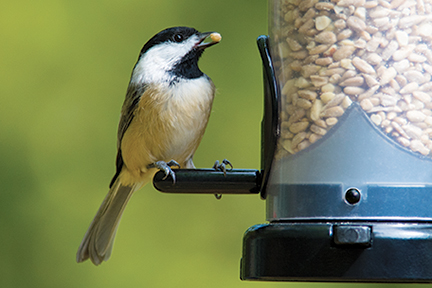
    It may not seem like much, but having to shell every seed you eat can take time and energy. Moms need all the energy they can muster for building a quality nest, laying eggs and raising young. Blends without any shells offer a grab-and-go bite of quick energy.
    Our White Deluxe Plus Blend is packed with sunflower chips and chopped tree nuts, a great source of protein. Protein is essential for baby birds from the time they hatch until they are fully grown. This includes growing strong feathers which are made up of over 90% protein.
    White Deluxe Plus Blend also includes calcium, a mineral birds need during nesting season..
Eastern Bluebirds on Dinner Bell
    Mealworms attract common and uncommon insect-eating birds. They are a convenient protein-packed food. Offer them in an EcoClean® Dinner Bell™, SideDish™ Feeder or other smooth-sided tray feeders.
    Jim’s Birdacious® Bark Butter® Bits are packed with energy for quick grab-and-go bites with added calcium. The much needed calcium is attractive to egg-laying Moms as well as nestlings and fledglings.

They're Back!!

Now is the time to put your feeders out and try to entice those early arrivals to stay and nest in your yard for the summer.

Are you ready for your hummingbirds to arrive? Here's a quick checklist:

  • Hummingbird feeder cleaned and hung in open area that is easy for migrating hummingbirds to see.
  • Fresh nectar made in 4:1 ratio (on cooler days nectar can last 4-5 days, but once it begins to rise above 80 degrees, nectar can go bad in 2-3 days).
  • Ant moat to keep pesky insects out of your feeder.
  • Plenty of red nearby, either from flowers, ribbon, or feeders to catch hummingbirds' attention.

We have all the supplies to make sure you are prepared for the arrival of your Hummingbirds this year!

Nectar - Remember it’s Pure and Simple!

Here’s a random hummingbird fact - the average hummingbird found in North America tips the scales at around three grams and its brain only makes up about 4% of its body weight.

That means that their BB sized brain weighs in at a very minuscule 0.12 grams!

So, with such a tiny amount of brain power, just how do they remember a thousand mile migration route that ends up at the same exact nectar feeder they used last year?

It’s a truly amazing feat! Especially when you consider that the human brain weighs in at a whopping 1350 grams and some of us (who will remain nameless) always seem to have trouble remembering even the simplest things…like the recipe for hummingbird nectar!

Is it a 6:1 ratio or 4:1? Is the 4 the sugar part or is it the water portion?

Well, it’s important to remember that the simple recipe for hummingbird nectar is the 4:1 ratio - 4 parts water to 1 part white table sugar. This concentration has proven safe and attractive to hummingbirds for decades and closely mimics the average concentration (20%) of the natural flower nectar on which hummingbirds feed.

Hummingbird nectar should always be made from simple table sugar (sucrose) as it is the closest possible duplicate of natural flower nectar. Sugar alternatives such as honey, artificial sweeteners, raw sugar, organic sugar, brown sugar or additives such as preservatives and red dyes should not be used as they can potentially be harmful to hummingbirds.

Be sure to visit us soon and we can help you with the simplest way to make pure nectar for your hummingbirds by using our WBU Nectar and our WBU Nectar Bottle. You will never have to worry about remembering the recipe again!

Tom, Donna & Chris Sheley, Store Owners

Nature Happenings

• May 5: Full Moon, May 20: New Moon
• May 5 – 6: Eta Aquarids meteor shower
• May 12: International Migratory Bird Day
• Hummingbirds and orioles return at the beginning of the month.
• Warbler migration peaks early in May. Nearly 30 species will migrate through the region.
• Sub-adult Purple Martins return to establish new colonies early in the month.
• Yearling Purple Martins (previous year's fledglings) arrive mid- to late-May.
• Peak of warbler migration early to mid-month.
• Rose-breasted Grosbeaks, nighthawks, Wood Thrushes, Veerys and Chimney Swifts return.
• Peak of bird courtship. Listen for the morning chorus.
• Nesting materials are being collected.
• Chickadees and titmice become scarce at feeders as they nest and raise their young.
• Mosquitoes can begin to be a problem late in the month.